
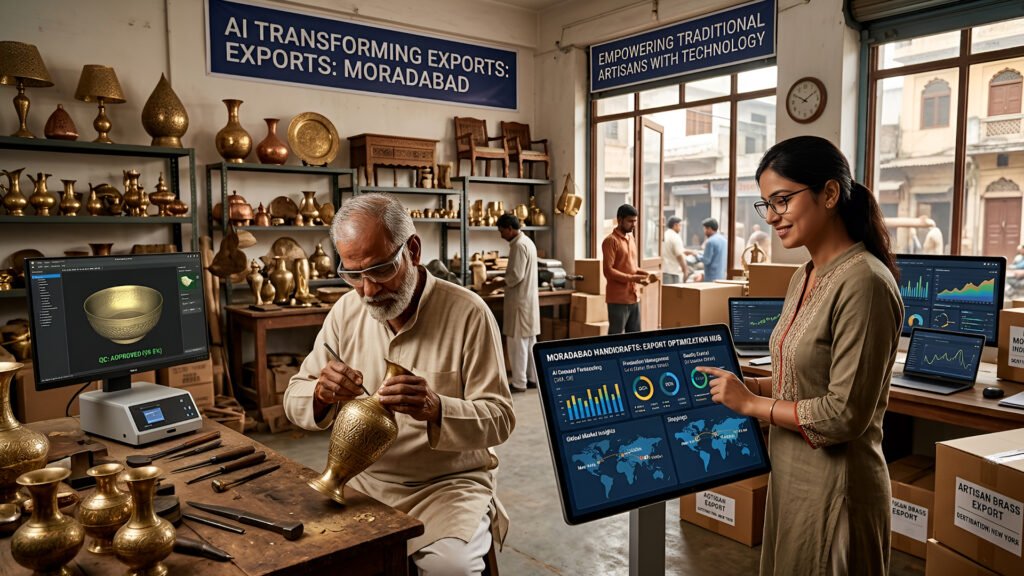
Moradabad, known as the “Brass City of India,” has built a global reputation for handicrafts and home décor. Yet many exporters still rely on traditional methods—agents, manual documentation, and slow communication. In today’s fast-moving global trade environment, that approach is costing opportunities.
Artificial Intelligence (AI) is changing the game.
The Problem with Traditional Exporting
How AI Solves These Challenges
1. Smarter Buyer Discovery
AI-powered platforms can identify verified global buyers based on real trade data. Instead of waiting for inquiries, exporters can proactively reach out to the right prospects.
2. Automated Global Communication
AI tools now generate and send personalized emails in multiple languages, helping exporters connect with buyers in Europe, the Middle East, and beyond—without language barriers.
3. Error-Free Documentation
From invoices to shipping documents, AI can scan, verify, and flag errors instantly. This reduces costly mistakes and ensures compliance with international trade regulations.
4. Data-Driven Market Expansion
AI provides insights into which countries are importing specific products, pricing trends, and demand patterns—helping businesses target the right markets.
5. Streamlined Operations
With AI-powered ERP systems, exporters can manage inventory, orders, and logistics from a single platform, improving efficiency and scalability.
Why This Matters Now
Global buyers expect speed, accuracy, and professionalism. Exporters who adopt AI can respond faster, reduce operational costs, and build direct relationships with international clients.
